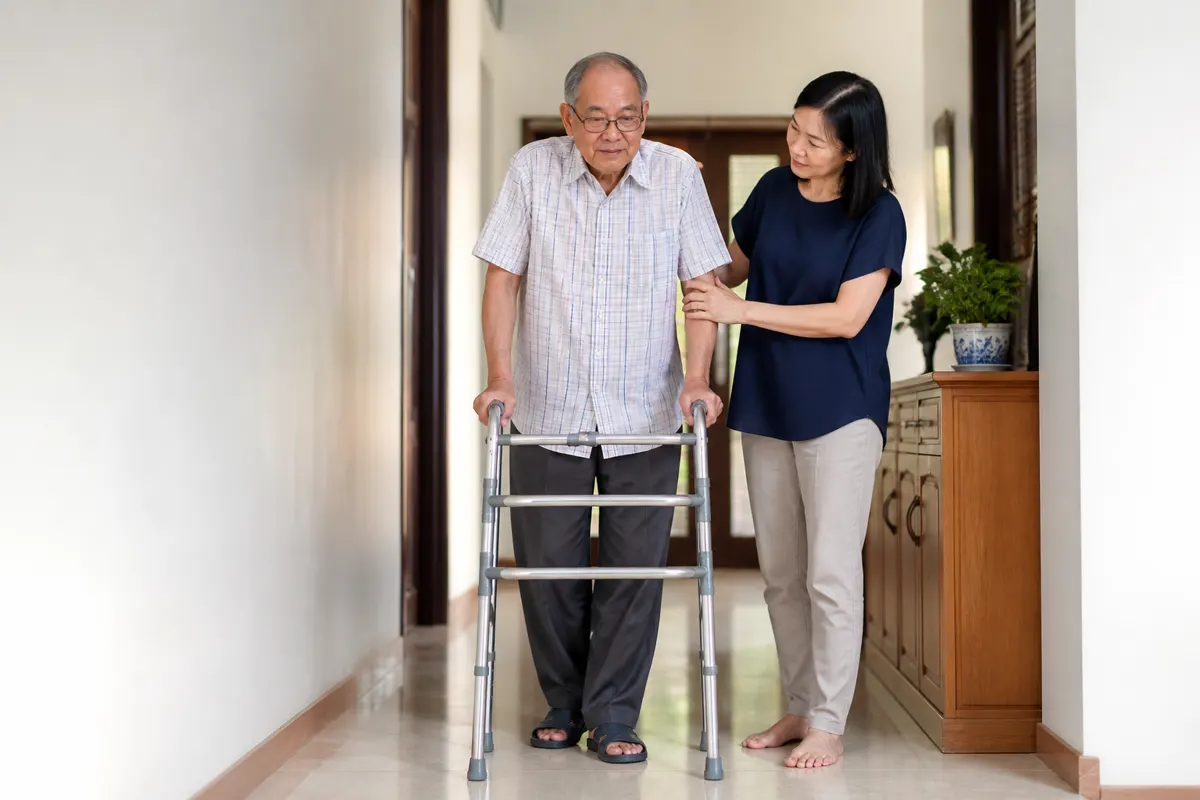
Caregiver Support After a Stroke
The care plan should describe the person’s advised transfer method, one-sided weakness, communication needs, swallowing instructions, equipment and warning signs.
An enquiry starts a conversation. Confirm identity, duties, schedule, fees and written terms before care begins.

Who this may help
- People returning home after stroke
- Families coordinating rehabilitation appointments
- Adults needing temporary help with personal care and mobility
Possible support
- Personal care using the instructed method
- Meal and hydration support within the prescribed plan
- Appointment accompaniment
- Home routine and family handover notes
Important boundaries
- No unsupervised change to rehabilitation instructions
- Swallowing, feeding and transfer plans must follow professional advice
- New or worsening stroke signs are an emergency
Describe the person, not only the shift.
A clear brief helps everyone understand the work and its boundaries.
Describe an ordinary day
Start at wake-up and continue through bedtime. Note where hands-on help is needed, where supervision is enough and what the person still does independently. Include transfer method, walking aid, continence needs, food texture, communication style and sleep pattern.
State the practical requirements
Language, pets, stairs, smoking rules, transport, driving expectations, food practices and hospital appointments can affect whether an arrangement works.
Keep clinical tasks visible
If wound care, injections, tubes, catheters, medication administration or clinical monitoring are involved, state this at the start and ask the treating team which qualification is required.
Questions families ask
What should the caregiver know before discharge?
The safe transfer method, mobility aids, communication approach, diet or swallowing plan, toileting needs and escalation instructions.
Can a caregiver do physiotherapy?
A caregiver may support an assigned routine if instructed, but does not replace a physiotherapist or design treatment.
Ready to describe the care needed?
Send the location and broad daily-support need. Add detailed or sensitive information only after the next step is clear.
Start a care enquiry