
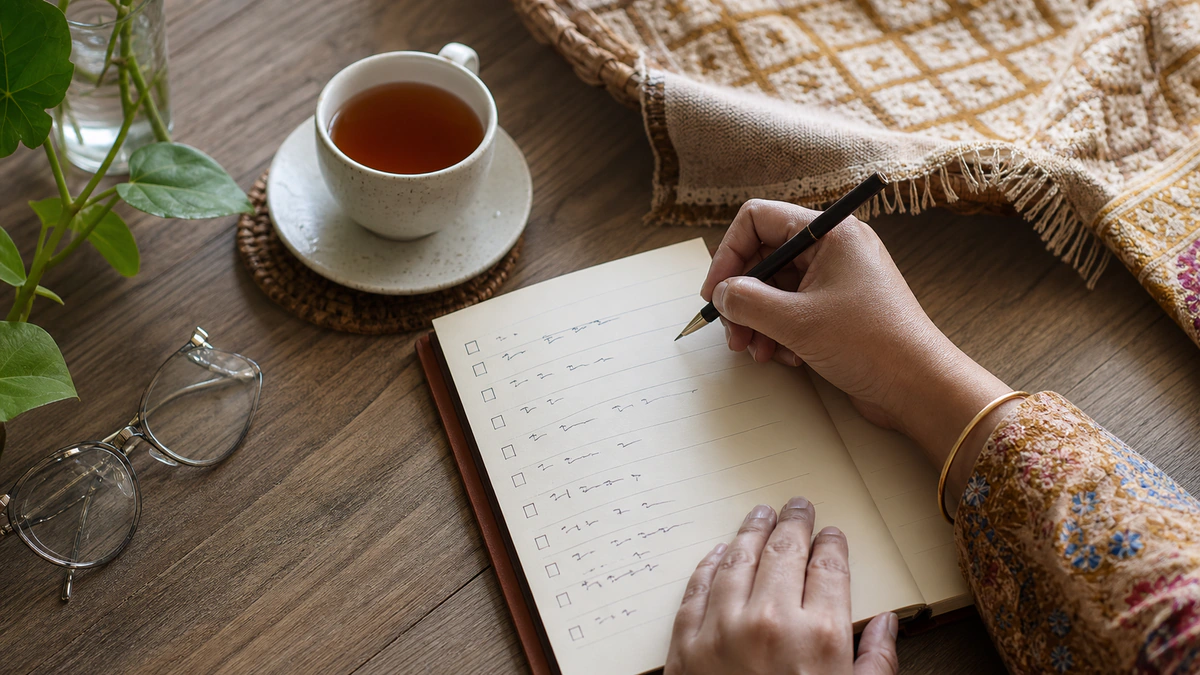
Food and fluid support should reflect the person’s diagnoses, swallowing instructions, fluid limits, cultural preferences and current clinical advice. Record observable intake and changes rather than prescribing a universal target.
A frail older adult eats and drinks best on small, frequent, protein-forward meals and steady sips through the day, rather than three heavy plates and a reminder to “drink more water.” In our heat the fluid side matters as much as the food, and a monthly weigh-in is the quiet early warning that catches trouble long before it shows on the face.
Small and often beats big and three times
A frail appetite fills fast and tires fast. A large plate three times a day asks the person to eat more in one sitting than a shrinking stomach wants, so half of it comes back to the kitchen and the day’s total intake drops. Offer less on the plate and more often instead: a proper breakfast, a mid-morning bite, lunch, a teatime snack, dinner, and something small before bed.
- Keep each portion the size of the person’s own appetite, then top up if they want more. A plate that looks manageable gets finished; a mountain gets abandoned.
- Build the snacks into the day so they are not a chore to remember: a boiled egg with the morning kopi, a slice of papaya at teatime, a few spoons of yoghurt before bed.
- Make the calorie-dense moments count. For an underweight elder, this is the one time I stop worrying about rich food. Add an extra egg, a little ghee, full-cream milk instead of skimmed, santan where the diet allows.
Protein is the piece most home plates miss
Older muscle wastes faster and rebuilds slower, and the everyday Malaysian plate, heavy on rice and light on the lauk, often leaves the protein thin. Put a palm-sized piece of protein at the centre of each main meal and spread it across the day rather than loading it all into dinner.
- Reach for what the kitchen already cooks: steamed or fried fish, chicken, egg in any form, tofu and tempeh, dhal, minced meat in a soft porridge.
- Eggs are the frail elder’s friend, being soft, cheap, easy to chew and welcome at any meal. A steamed egg custard slips down when nothing else appeals.
- Add dairy quietly: milk in the porridge, yoghurt as a snack, a milky Milo or Horlicks at night. It lifts both protein and fluid in one cup.
- If chewing is the barrier, mince, flake or slow-cook the protein soft rather than dropping it from the plate. Dropping the meat is how the day’s intake quietly hollows out.
Fluids without the nagging
Dehydration in older adults rarely announces itself. It shows up as confusion, a dry mouth, dark urine, constipation or a sudden dip in energy, and by then the person is well behind. The trick is to make drinking effortless and constant rather than a thing you keep chasing.
- Keep a filled cup within arm’s reach at all times, and offer a sip at every single visit to the room. Little and often, the same principle as the food.
- Count everything wet: plain water, soup, teh, kopi, barley, watery fruit like watermelon and orange, even the kuah over the rice. The person who waves away a glass of water will happily finish a bowl of sup.
- Use a cup the person likes and can lift easily. A heavy mug or a fiddly bottle quietly reduces how much goes down.
- Watch the urine, gently. Pale and regular is the reassuring sign; dark and infrequent means step the fluids up.
Teh, kopi and the heat
Most older Malaysians drink far more teh and kopi than plain water, and that is workable. The sweet, milky cup still counts as fluid, and for a thin, frail parent the condensed milk brings calories I am usually glad to see. Two honest caveats: a full sweet drink right before a meal can blunt an already small appetite, so time the kopi for between meals; and caffeine late in the day can unsettle sleep, so shift the last cup earlier.
The heat is its own quiet drain. An older body sweats and senses thirst less reliably than a younger one, so a frail parent sitting through a hot, still afternoon in a top-floor flat can slide toward dehydration while never once feeling thirsty. Keep the room ventilated or the fan on, push extra fluids through the hottest part of the day, and treat a sudden bout of confusion or drowsiness in the heat as a reason to get fluids in and, if it fails to settle, to call the doctor.
Weigh monthly, and treat it as your early warning
The single most useful number in home care for a frail elder is their weight, taken the same way once a month. Slow weight loss is almost invisible day to day, because the face changes so gradually that the family living with it stops seeing the shift, but the scale keeps an honest record.
- Weigh on the same scale, at the same time of day, in similar clothing, and write the number down with the date. A line on the fridge or in the handover note is enough.
- A single reading tells you little. The pattern over two or three months is the signal: a steady downward drift means intake is losing to needs, and it is time to look at why.
- Loose clothing, a belt tightened a notch, rings spinning on the finger and dentures that suddenly do not fit are the same warning in another form.
Constipation and low fluids travel together
A frail parent who eats less and drinks less almost always drifts toward constipation, and constipation then kills the appetite in a vicious little circle: the person feels bloated and full, so they eat and drink even less, which makes the problem worse. It is one of the quiet reasons a good eater goes off their food.
- Push the fluids first, since a dry system is the commonest cause. Water, soup and watery fruit all help.
- Keep some fibre in the day the person can manage: soft fruit like papaya and banana, well-cooked vegetables, wholegrain porridge, a few prunes.
- Keep them moving, even gently. A short daily walk does more for a sluggish gut than most things in the cupboard.
- If constipation turns stubborn or painful, that goes to the doctor or pharmacist rather than a guessed remedy at home.
When weight loss belongs with the doctor
Feeding and fluids are home territory, and most of this article sits squarely in a caregiver’s hands. One boundary, said once: unexplained or rapid weight loss, a sudden loss of appetite lasting more than a few days, or new difficulty swallowing is a medical question, and it belongs with the doctor rather than with more supplements or force-feeding at home.
The treating team looks for the cause; the home makes the food appealing and the fluids easy. If appetite itself is the sticking point rather than the mechanics, the companion piece on appetite loss and practical meals covers tempting a parent who has stopped finishing the plate, and if swallowing is part of the picture, safer mealtimes sets out the positioning and pace that keep each mouthful safe.
The daily caregiver layer
Start with the scale and the cup, this week: weigh your parent on the same scale, write the date next to the number, and keep a filled cup in reach at every visit to the room. Everything else in this guide — the extra egg, the mid-morning snack, the softened protein — builds on those two habits. Our elderly care overview covers the rest of the daily support that sits around feeding and fluids.